
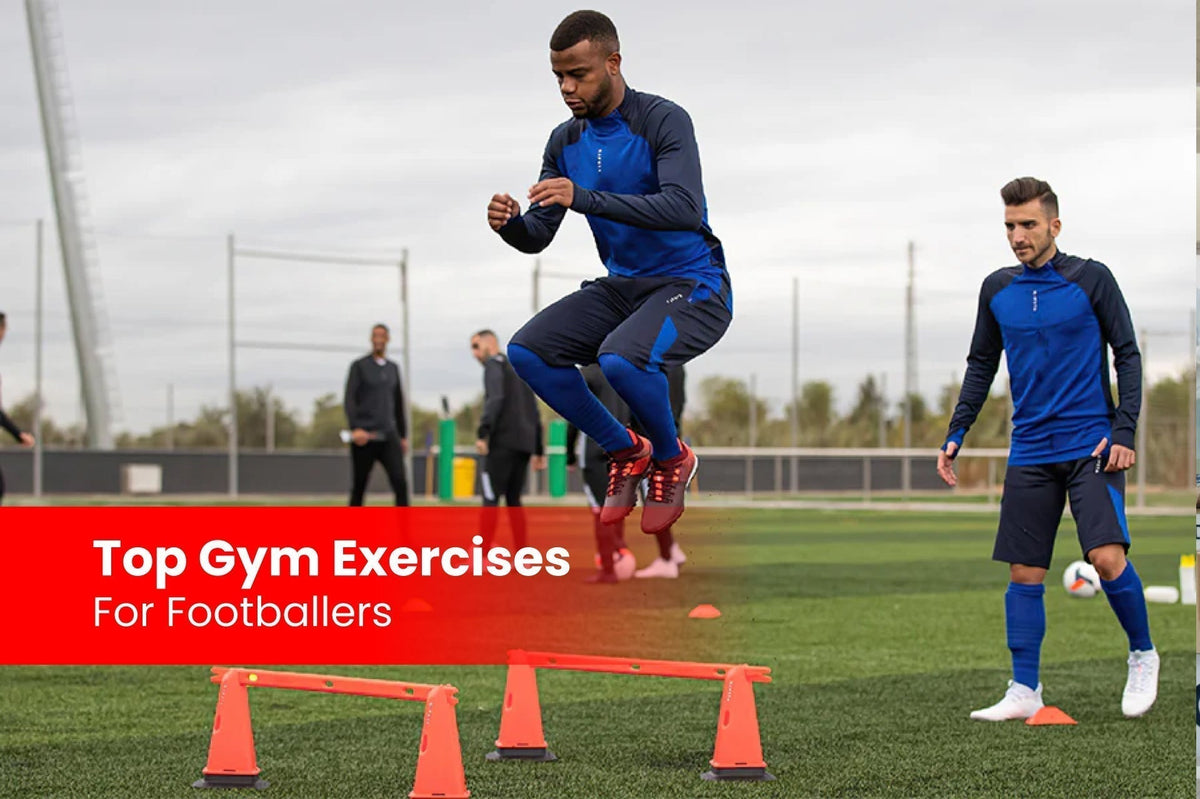
The best gym exercises for footballers include squats, deadlifts, lunges, bench press, pull-ups, planks, box jumps, and sled pushes. These movements build lower-body strength, explosive power, upper-body stability, and core endurance — all essential for sprinting, tackling, jumping, and maintaining balance during matches.
Why Gym Training Matters for Footballers
Football demands a blend of speed, strength, agility, and stamina. While training on the pitch develops technical skills, gym work improves the physical base that supports those skills. Stronger muscles reduce injury risk, improve acceleration, and help players hold their ground against physical opponents.
1. Squats
A foundational movement for building leg strength and power. Squats target the quadriceps, hamstrings, and glutes, which are heavily involved in sprinting and kicking. Variations like front squats or Bulgarian split squats can add balance and unilateral strength.
2. Deadlifts
Deadlifts strengthen the posterior chain — hamstrings, glutes, lower back, and traps. This boosts explosive acceleration and jump height, while also improving resilience against lower-back injuries.
3. Lunges
Lunges improve balance, single-leg strength, and hip stability. Walking lunges and reverse lunges also help correct muscle imbalances between the legs, which is crucial for footballers who often plant and push off with one leg more than the other.
4. Bench Press
Upper-body strength helps in shielding the ball and holding off opponents. The bench press strengthens the chest, shoulders, and triceps, aiding in stability and force during physical challenges.
5. Pull-Ups
Pull-ups develop upper-back and arm strength, improving posture and grip. A strong back also supports shoulder health, which is important for aerial duels and absorbing impacts.
6. Planks and Core Work
A strong core stabilises the body during turns, tackles, and sprints. Plank variations, Russian twists, and hanging leg raises all improve rotational control and balance.
7. Box Jumps
Plyometric box jumps build explosive leg power for sprint starts, sudden changes of direction, and aerial challenges like headers.
8. Sled Pushes
Pushing a weighted sled develops raw lower-body strength and power, while also mimicking the pushing and resistance demands found in physical duels on the pitch.
Training Tips for Footballers in the Gym
-
Prioritise functional, compound movements over isolated machine work.
-
Train both strength and explosive power in the same program.
-
Keep reps moderate (4–8 for strength, 8–12 for endurance), and include plyometrics.
-
Allow for recovery — gym work should complement, not replace, on-field training.
Key Takeaway
The most effective gym program for footballers combines strength, power, and core training. Squats, deadlifts, lunges, bench press, pull-ups, planks, box jumps, and sled pushes all target the muscle groups and movement patterns that directly translate to better performance on the pitch.
Share:
Top 3 Female Athlete Body Types
What Is a 5 Day Workout Split and Why Should You Try It?