
Blog Objective
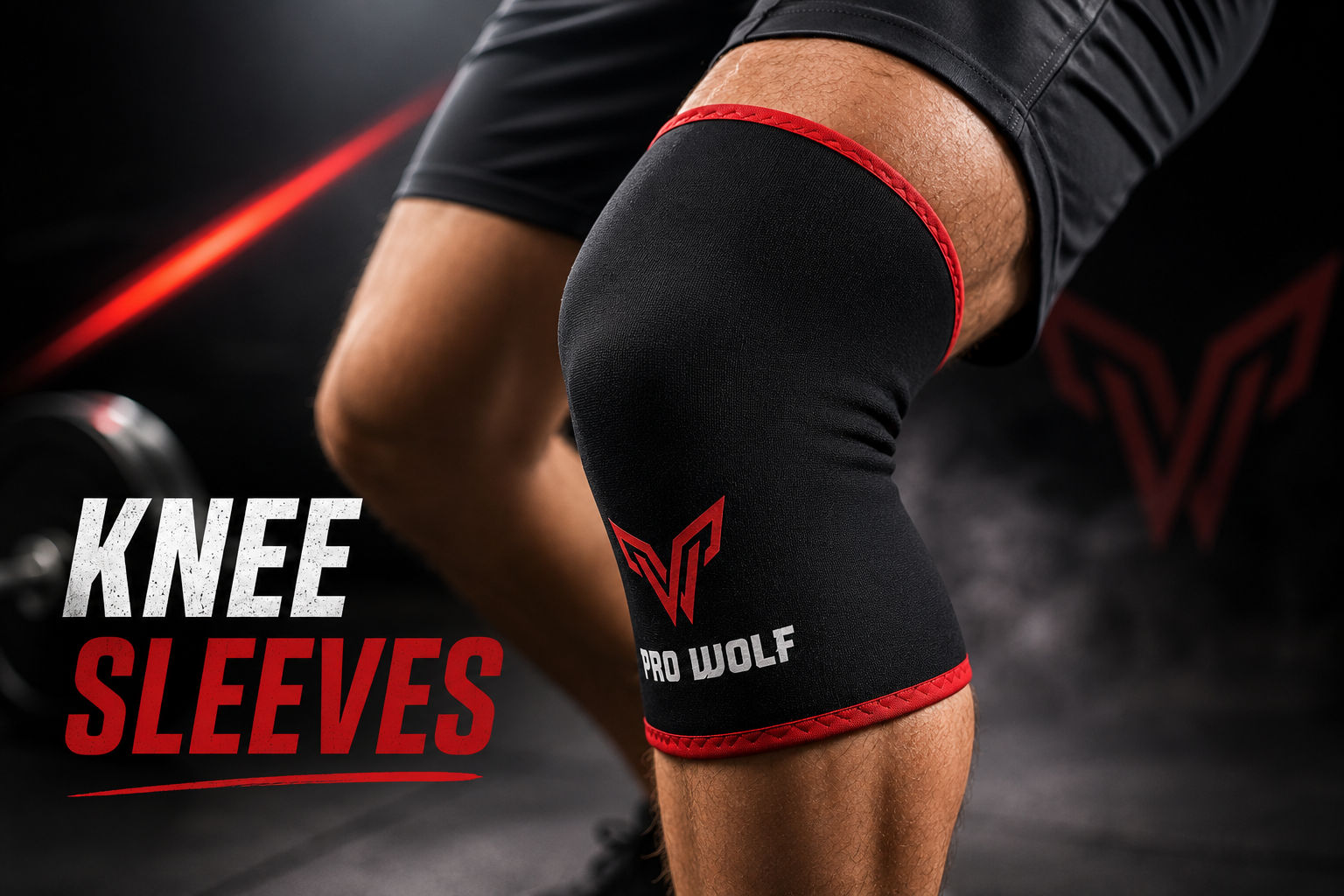
This guide breaks down everything an Indian lifter needs to know before buying knee sleeves, from how they work to which compression level actually fits your training. Every detail here comes straight from ProWolf's own product range, so you get real specs instead of guesswork.
Did You Know
According to the latest Time Use Survey by India's National Statistics Office, only 9.7% of Indians exercised on a given day in 2024, and among those who did, men averaged just 60 minutes per session. With gym time this limited, protecting your knees so you never lose a training day matters more than most lifters realize.
Key Takeaways
-
Knee sleeves come in several compression levels, from 5mm up to advanced options like XTM Gold Ultra, each built for a different stage of training.
-
The right pair keeps your knees warm, supported, and stable during squats, deadlifts, and lunges.
-
ProWolf's sleeves use dense CR neoprene and a patented S-shape design for a snug fit.
-
Picking sleeves based on your training level, not just the price tag, saves you injuries down the line.
Why do your knees feel shaky halfway through a heavy squat session? Plenty of lifters across India ask themselves this same question the moment they load extra plates onto the bar. Most of us focus so much on the numbers we are lifting that we forget the joint carrying all that load. Government data shows men who exercise daily in India spend close to 60 minutes per session, and that is a lot of time for your knees to stay under pressure without backup. This is where knee sleeves step in as one of the most practical gym accessories a lifter can own. In this blog, we will explain what knee sleeves do, how they help your training, and how to pick the right compression level for your goals.
Table of Contents
-
What Knee Sleeves Actually Do for Your Knees
-
Knee Sleeves Benefits Every Lifter Should Know
-
How to Choose the Best Knee Sleeves for Your Level
-
Weightlifting Knee Sleeves vs Knee Wraps
-
Which Compression Level Matches Your Training
What Knee Sleeves Actually Do for Your Knees
Knee sleeves are compression sleeves you pull on around the knee joint before squats, deadlifts, or any heavy lower body lift. Unlike a wrap you have to tie on, a sleeve slides on as one snug piece and stays put through your whole set. It compresses the joint, traps heat, and gives your knee a stable, held-together feeling once the bar starts to feel heavy.
-
Wraps around the knee joint in one piece for even pressure
-
Traps body heat to keep the joint warm through long sessions
-
Offers a slight bounce-back feel to help drive out of a deep squat
-
Pairs well with other weightlifting gear like belts and lifting straps
Knee Sleeves Benefits Every Lifter Should Know
The real advantages of knee sleeves show up once you start pushing your training harder. It is not just about looking the part in the gym. A good pair changes how your knee feels under the bar, session after session, and that adds up over months of training.
-
Added joint stability during squats, lunges, and leg press
-
Warmth that keeps blood flow moving, which many lifters say eases stiffness
-
More confidence under the bar, since a supported knee feels less shaky on heavy sets
-
A smart pick for both strength training days and lighter accessory workouts
How to Choose the Best Knee Sleeves for Your Level
Picking the right knee sleeves comes down to matching the compression level to where you actually are in your training, not to what the strongest lifter in your gym wears. ProWolf builds its sleeves from dense CR neoprene with a patented S-shape design, and they run from thinner, stretchy options to stiff, competition-ready pairs.
-
New lifters or CrossFit style training usually do fine with a 5 mm, Level 1 sleeve for light, stretchy support
-
Intermediate lifters chasing bigger squats often move up to 7mm or 9mm, Level 2 sleeves
-
Competitive powerlifters training for meets tend to reach for Level 3 options like the XTM POWR
-
Advanced lifters wanting maximum stiffness go for Level 4 or 5 sleeves such as XTM Gold or XTM Gold Ultra
Weightlifting Knee Sleeves vs Knee Wraps
Not every lifter needs the same support, which is why weightlifting sleeves and knee wraps exist side by side. Sleeves and wraps solve slightly different problems, and knowing the difference saves you from buying the wrong gear.
-
Sleeves slide on as one piece, while wraps need to be wound around the knee before every set
-
Wraps generally give more rigid, aggressive support, best suited for max-effort attempts
-
Sleeves are easier to reuse across every exercise in a session without retying
-
ProWolf's knee wraps use a hook-and-loop strap for a secure, adjustable fit on heavy pulls
Which Compression Level Matches Your Training
Since every lifter's needs are different, here is how Pro Wolf compression levels stack up against each other. Use this table to quickly match your training stage to the right sleeve before you shop.
|
Level |
Thickness |
Neoprene Density |
Best Suited For |
|
Level 1 |
5mm |
40% denser SCR neoprene |
CrossFit and weightlifting |
|
Level 2 |
7mm / 9mm |
62% denser CR neoprene |
Powerlifting and weightlifting |
|
Level 3 (XTM POWR) |
7mm |
84% denser CR neoprene |
Advanced powerlifting, training and competition |
|
Level 4 (XTM Gold) |
7mm |
95% denser CR neoprene |
Advanced powerlifting |
|
Level 5 (XTM Gold Ultra) |
7mm |
98% denser CR neoprene |
Advanced powerlifting |
Your Knees Deserve the Same Effort as Your Lifts
Most lifters plan their program, their diet, and their next personal best, but the joint carrying all that work often gets ignored until it starts hurting. A well-chosen pair of knee sleeves is a small investment next to the training time it protects. ProWolf's patented sleeves are trusted by professional athletes and supplied to sports institutes across India, so you train with gear built for people who take their strength training seriously. Pick the level that matches where you are today, and let your knees catch up to your ambition.
FAQs
Are knee sleeves good for weightlifting?
Yes, knee sleeves add joint stability, warmth, and a supported feeling during squats and other heavy lifts. They are widely used by both weightlifters and powerlifters for training and competition.
What size knee sleeves should I buy?
Measure around your kneecap and match it against the brand's size chart, since sizing usually runs from XS to 4XL. A sleeve that is too loose will not give proper compression, so always size down if you are between two sizes.
How tight should knee sleeves be?
They should feel snug and compress the joint without cutting off circulation or causing numbness. A properly fitted sleeve feels firm the moment you pull it on, not painful.
Can I wear knee sleeves every day?
Yes, many lifters wear a lighter, lower compression pair for daily training and save stiffer sleeves for heavy or competition days. Just make sure to air them out between sessions to keep them fresh.
Share:
The Best Travel Hiking Backpack for Gym, Travel and Everyday Use
The Complete Gym Belt Buying Guide: How to Pick the Right Weightlifting Belt