Foot position, sole design, grip, flexibility, and support can change how well your feet connect with the floor. The right training shoes should match the demands of your workout rather than simply look good in the gym. A stable sole can support heavy lifts, while flexible construction can help during drills that need quick foot movement. Your choice should depend on how you train, how much stability you need, and how your shoes respond under load.
What Makes a Gym Shoe Suitable for Different Workouts?
A gym shoe has to handle more than walking between machines. Strength workouts place repeated pressure through the heel, midfoot, and toes. Cross-training can add jumps, lunges, lateral steps, and short bursts of movement. These activities need different levels of grip, flexibility, cushioning, and foot support.
A shoe with a soft, thick sole may feel comfortable during casual workouts. However, too much cushioning can reduce the firm connection needed during heavy lifts. A flatter sole can give the foot a more stable base, while a wider toe area can allow the toes to spread naturally.
Think about your main training style before choosing a pair. Your shoes should help you maintain a steady foot position instead of making you fight the footwear during each movement.
Choose Sole Design Based on Your Training
The sole is one of the most important parts of a gym shoe. It affects balance, ground contact, grip, and how your foot responds to force.
For deadlifts, a low and flat sole can reduce the distance between your feet and the floor. This setup can support a stable starting position and help maintain a strong connection with the ground.
Squats can benefit from a firm base and controlled heel position. Dedicated lifting shoes may use a raised heel to support a more upright squat position.
For mixed workouts, look for a sole that offers both grip and controlled flexibility. The best choice depends on whether lifting, conditioning, or general training takes up most of your sessions.
When Flat Shoes Make Sense for Lifting
Flat shoes are often useful for movements where ground connection matters. Deadlifts are a clear example because lifters need a stable base while pushing against the floor.
A minimal sole can also give the foot a more direct feel. This can help you notice how your weight is distributed across the foot during a lift. A wide toe box can add another benefit by giving the toes more room to spread.
If deadlifting forms a large part of your routine, focus on grip, sole height, foot room, and lockdown. These details can matter more than extra cushioning.
When Raised-Heel Lifting Shoes Are Useful
Squats place different demands on footwear. Some lifters prefer a raised heel because it can support ankle positioning and help them maintain a more upright torso.
Dedicated weightlifting shoes are built around this type of use. They usually have a firm platform and a secure upper that limits unwanted foot movement.
PRO WOLF's PRx700 V2 is designed as a weightlifting squat shoe. The current collection lists the model in black, red, and blue, giving lifters options within the same design range.
If your training focuses on squats and Olympic-style movements, a dedicated lifting design can make more sense than a general gym shoe.
What to Look for in Cross-Training Shoes
Cross-training needs a different balance. Your feet may move forward, backward, sideways, and upward within the same workout.
Look for:
-
A secure fit that limits unwanted foot movement.
-
Grip that works across common gym surfaces.
-
Enough flexibility for lunges and bodyweight drills.
-
A stable base for strength exercises.
-
Breathable materials for longer sessions.
-
Toe space that does not force your toes together.
If your routine changes from strength work to conditioning often, avoid choosing shoes based on one exercise alone. A balanced design can make sense when your workouts cover several movement types.
Why Toe Space Matters During Strength Training
Your toes help create contact with the floor. When footwear gives them enough room, they can spread instead of being pushed together.
This can be useful during movements where balance and foot pressure matter. A cramped toe box can also make the shoe feel restrictive during long sessions.
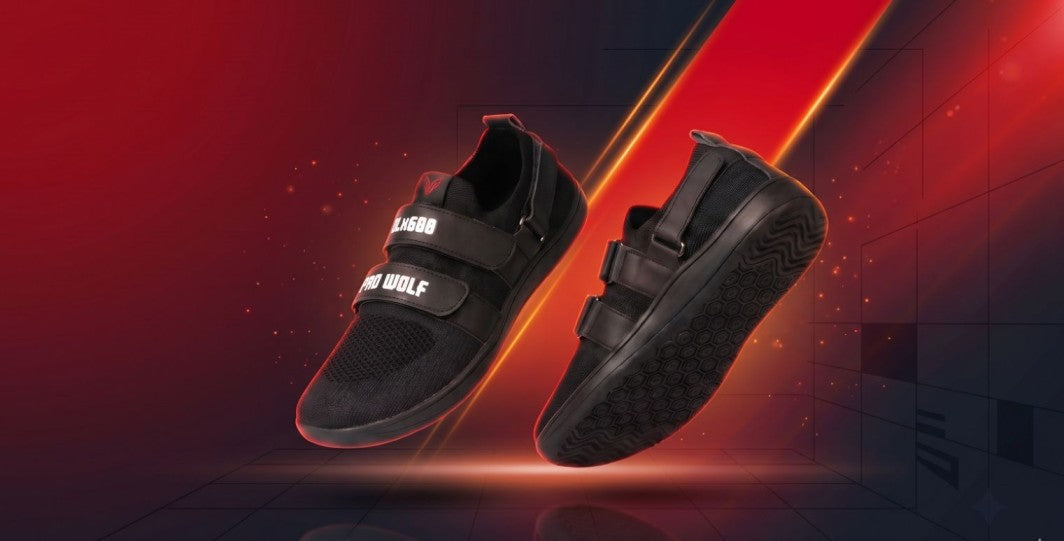
PRO WOLF's DLx600 uses a wider toe box designed to allow natural toe spread. Its design also uses a flat 3mm sole and zero-drop platform for a more grounded feel.
For lifters who prefer minimal footwear, these features can provide a useful starting point when comparing gym shoes.
PRO WOLF Shoes for Different Lifting Needs
Our footwear range focuses on lifting and gym training, with designs built around different movement demands. We offer deadlift shoes with flat soles and weightlifting shoes designed for squat-focused training.
DLx600 Wider Toe Box Deadlift Barefoot Gym Shoes
The DLx600 is built around a flat, barefoot-style setup. Its main features include:
-
Wider toe box for natural toe spread.
-
3mm flat sole for a stable ground feel.
-
Zero-drop platform.
-
Flexible sole for foot movement.
-
Anti-slip rubber sole with a multi-directional hexagonal pattern.
-
Triple-strap lockdown for added foot stability.
-
Extra ankle strap for lateral support.
These features make the DLx600 suitable for lifters who want minimal cushioning and strong ground contact. The model is currently offered in black, white, and red.
DLx550 Deadlift Barefoot Gym Shoes
Our DLx550 range is another option for deadlift-focused training. It follows the barefoot-style approach used across our deadlift footwear collection. The current PRO WOLF range lists DLx550 options in several colours.
If you are looking to buy men weightlifting shoes online, start by identifying the lifts you perform most often. A deadlift shoe and a squat shoe solve different problems, so the product design should match your training.
PRx700 V2 Weightlifting Squat Shoes
The PRx700 V2 is designed for squat and weightlifting sessions. It provides a more dedicated platform than a minimal deadlift shoe.
This type of shoe can suit lifters who spend more time on squats and technical lifting movements. The model is currently available in multiple colour options through our collection.
How to Pick the Right Pair for Your Workout
Start with your main movement rather than the shoe's appearance. If deadlifts dominate your routine, a flat and grippy sole can be useful. If squats are your main focus, consider a dedicated raised-heel lifting design.
Foot width also matters. People with wider feet may prefer more toe room, especially when training barefoot-style. If you combine lifting with conditioning, consider how much flexibility you need between strength sets.
Our DLx600 is also listed as the DLx600 lifting shoe India shoppers can explore when looking for a dedicated deadlift option. Its design focuses on foot connection, toe space, grip, and secure lockdown.
Why Choose PRO WOLF for Your Training Footwear?
At PRO WOLF, we build our footwear around the demands of strength training. We focus on stable platforms, secure fits, grip, and designs that suit different lifting styles.
Our footwear range includes:
-
Deadlift shoes with flat, low-profile soles.
-
Wider toe box designs for natural foot placement.
-
Weightlifting squat shoes for dedicated lifting sessions.
-
Flexible designs for lifters who prefer a barefoot-style feel.
-
Multiple colour and model choices across our footwear range.
Our DLx600, DLx550, and PRx700 V2 models cover different lifting needs, from minimal deadlift footwear to dedicated squat shoes.
Find the Right PRO WOLF Shoes for Your Training
Your gym shoes should support the way you train, not force your workout to fit the footwear. Visit our official PRO WOLF website to explore our lifting shoe range, compare designs, and find the right pair for your routine. We offer purpose-built options for deadlifts, squats, and demanding gym sessions. Choose your fit, explore our models, and train with confidence.
Share:
Gym Shoes Guide: Choosing the Right Shoes for Your Workout
Durable Gym Backpacks for Men: Ideal for Workouts and Travel