

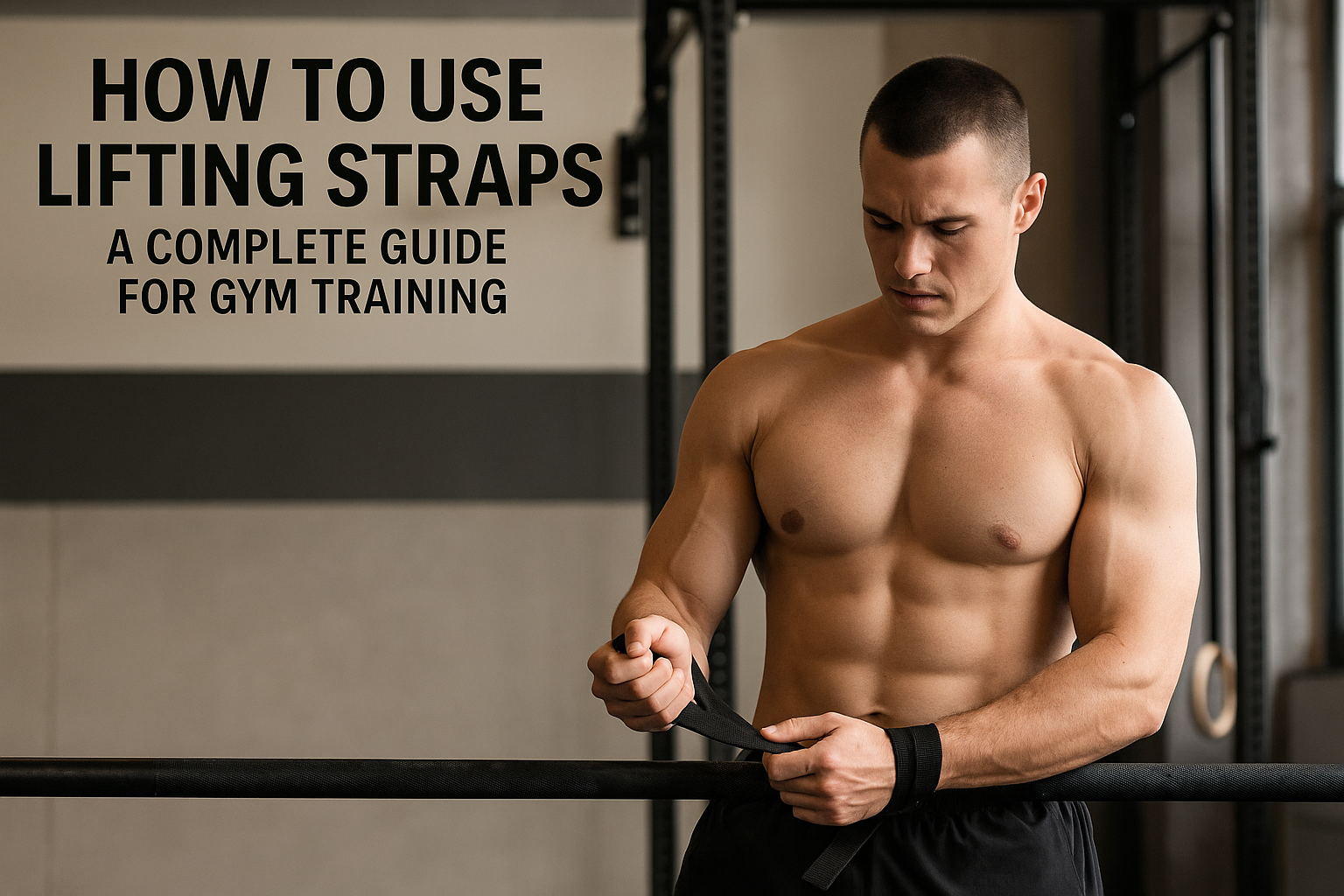
When your grip gives out before your muscles, lifting straps can be the solution. Knowing lifting straps properly ensures you lift heavier, train safer, and target muscles more effectively. This guide covers different exercises, techniques, and tips so you can maximize your results.
What Are Lifting Straps and Why Use Them?
Lifting straps are gym accessories designed to support your grip by securing your hands to the barbell, dumbbell, or machine handle. They help reduce forearm fatigue and allow you to focus on the target muscle group.
-
Benefit 1: Prevent grip failure during heavy lifts.
-
Benefit 2: Improve pulling strength for back and leg workouts.
-
Benefit 3: Reduce stress on forearms and wrists.
How to Use Lifting Straps Properly
Many lifters misuse straps, which limits their effectiveness. Here’s the correct way:
-
Thread the loose end through the loop to create a circle.
-
Place your hand through the circle, strap lying flat across your palm.
-
Wrap the long end around the bar in the same direction as your fingers.
-
Tighten the strap by twisting the bar until it grips securely.
-
Keep your wrist straight and maintain tension.
Using lifting straps properly not only improves safety but also maximizes muscle engagement.
How to Use Lifting Straps for Deadlifts
Deadlifts are the most common exercise for straps. When grip strength limits your pull:
-
Wrap straps tightly around the barbell.
-
Keep wrists straight to avoid strain.
-
Focus on driving through your legs and hips, letting straps support the grip.
Pro tip: Use straps for heavy sets, but still train grip strength with warm-ups.
How to Use Lifting Straps for Dumbbells
Dumbbells can slip during rows or shrugs, especially at higher weights.
-
Loop straps around each dumbbell handle.
-
Wrap inwards (towards your thumb) for better stability.
- Use them for dumbbell rows, shrugs, or farmer’s carries to focus on muscle contraction without worrying about grip failure.
How to Use Lifting Straps on Lat Pulldown
Straps are excellent for back isolation exercises like lat pulldowns.
-
Wrap straps around the pulldown bar.
-
Keep elbows driving down instead of overusing forearms.
-
Straps allow you to feel the lats working harder, especially at higher reps.
How to Use Lifting Straps for Pull-Ups
If your grip burns out before your back, straps help:
-
Secure straps around the pull-up bar.
-
Focus on pulling chest to bar with controlled movement.
- This helps develop back width without grip becoming the limiting factor.
How to Use Lifting Straps in the Gym
Whether you’re training back, legs, or shoulders, straps can fit into multiple gym sessions:
-
Heavy Deadlifts → For maximum load without grip loss.
-
Pulling Movements → Rows, pulldowns, pull-ups.
-
Accessory Work → Dumbbell shrugs, rack pulls.
Important: Don’t use straps for pressing exercises (bench press, overhead press), as they offer no benefit.
When Should You Use Lifting Straps?
-
During heavy pulling sets (after warm-ups).
-
When grip fatigue limits target muscle growth.
-
In higher-rep hypertrophy workouts where grip isn’t the focus.
Avoid overusing them your grip strength should still be trained naturally.
FAQs About Using Lifting Straps
Q1: Should beginners use lifting straps?
Yes, but only once they’ve built some base grip strength. Straps should support, not replace, grip development.
Q2: Can lifting straps cause weaker grip over time?
If overused, yes. Balance strap use with grip-strength exercises like farmer’s carries and bar hangs.
Q3: Are lifting straps and wrist wraps the same?
No. Wrist wraps provide joint stability, while lifting straps improve grip for pulling exercises.
Q4: How long do lifting straps last?
With proper use, fabric straps last 6–12 months. Leather straps can last longer.
Final Thoughts
Knowing how to use lifting straps correctly can take your training to the next level. Use them strategically on deadlifts, dumbbell rows, lat pulldowns, and pull-ups to maximize strength and muscle growth while preventing grip fatigue.
Share:
Top 10 Best Lower Abs Workout Exercises for a Stronger Core
12 Best Post-Workout Foods for Muscle Recovery